If you estimate probabilities for every belief you can therefore choose the belief that features the highest probability. This is can be used for purposes of predicting outcomes. But it can also be used to add weight to a belief one is looking to validate.
We take a basic probability formula, P(A) = n(A)/n(S) or written another way:
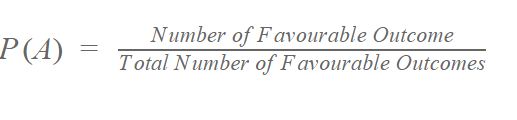
Where,
P(A) is the probability of an event “A”
n(A) is the number of favourable outcomes
n(S) is the total number of events in the sample space
There are other more advanced formulas to calculate probability but let’s stay with the most simple definition for our purposes. As Einstein said, “Everything should be made as simple as possible, but not simpler.” Which he actually did not say, it was a synthesis of a number of actual quotes he made while lecturing in Oxford, June 10, 1933. What he actually said was, “It can scarcely be denied that the supreme goal of all theory is to make the irreducible basic elements as simple and as few as possible without having to surrender the adequate representation of a single datum of experience.” And here, like the nature of the UFO/UAP phenomenon, we see and hear that things are not always as they seem, they then become further distorted when repeated through time and concepts appear as nested holons of similar construction.
In the application of probability to the study of the UFO phenomenon we use the formula as a framework. Probability does not need to apply to only numbers, it can apply to physical, real world facts. It can apply to language, our technology that identifies, defines and communicates those facts.
When considering the probability of a research case being valid for consideration we must take into account the evidence and data. Does the evidence rise to the standard of being fact? Does the data rise to the level of “ground-level,” absent of significant noise and superfluous values so as to lend solid support to the evidence?
When one considers evidence, what forms do we have to work with? Examples, radar returns, reliable witnesses, physical evidence, multiple witnesses – shared confirmation of events, photographic evidence and in some cases reliable, vetted documentation. As in data analysis, the more of it that is available, the more efficient and accurate the outputs shall be.
The above stated forms of evidence come with their own sets of sub-attributes which must be weighed carefully. Example, what are the attributes of a “reliable witness?” This is where witnesses who have trained observation skills rise to the top tier of reliability. Do they have knowledge of aeronautics? Meteorology and so forth? Are they honest? They do not seek fame and fortune or make attempts to overtly capitalize on their experience with the explicit goal of remuneration? These factors must be measured carefully.
When these outputs are solidly verifiable or verifiable to the extent that they present a low, acceptable margin of error then we can consider them “favourable outcomes.”
We shall therefore count the number of favourable outcomes we have as it relates to a specific case or broader area of research. Broad areas of research must first be built on a foundation of specific cases where the favourable outcomes affirm high probability. Example: several specific, targeted analysis of possibly anomalous structures on Mars if found to be uncorrelated to natural geologic forces can lay the foundation justifying wider research into the theory that structures are artificially constructed.
© 2020 Metron Deep Research All Rights Reserved
 MetronDeep
One thought on “The Usefulness of Probability in the Approach to the Study of the UFO/UAP Phenomenon.”